

Hey there! I'm a supplier of the Dust Cleaning System for Converters, and today I'm gonna share with you all about the kinds of filters used in these systems.
First off, let's understand why filters are so crucial in a Dust Cleaning System for Converters. Converters in the metallurgy industry generate a ton of dust and pollutants during their operation. These dust particles can be harmful to the environment and the health of workers if not properly removed. That's where the filters come in. They act as the guardians, trapping those pesky dust particles and ensuring that the air released into the atmosphere is clean.
One of the most commonly used filters in the Dust Cleaning System for Converters is the bag filter. Bag filters are like big, porous bags that the dirty air passes through. The dust particles get stuck to the inside of the bags, while the clean air flows out. They're pretty effective because they can capture a wide range of particle sizes, from large chunks to tiny microscopic ones.
The way bag filters work is quite interesting. As the dusty air enters the system, it's directed towards the bags. The bags are made of special materials that have tiny pores. These pores are small enough to stop the dust but large enough to let the air through. Over time, as more and more dust accumulates on the bags, the airflow can get restricted. That's when the cleaning mechanism kicks in. There are different ways to clean the bags, like using reverse air or pulse jets. Reverse air blows air in the opposite direction of the normal airflow, dislodging the dust from the bags. Pulse jets, on the other hand, send short bursts of high - pressure air through the bags to shake off the dust.
Another type of filter that's used is the cartridge filter. Cartridge filters are a bit more compact compared to bag filters. They're made up of multiple cartridges, which are cylindrical in shape. These cartridges are filled with a filter media that does the job of capturing the dust.
Cartridge filters have some advantages. They offer a high filtration efficiency in a relatively small space. This makes them a great choice when you have limited room for the dust cleaning system. They also have a longer service life compared to some other filters in certain applications. The cleaning process for cartridge filters is similar to bag filters. Pulse jets are often used to clean the cartridges, removing the accumulated dust and keeping the airflow going.
Now, let's talk about electrostatic precipitators. Although they're not exactly a traditional filter like bag or cartridge filters, they play a huge role in dust cleaning for converters. Electrostatic precipitators work on the principle of electrostatic attraction. The dusty air is passed through an area where the dust particles are given an electric charge. Then, they're attracted to collection plates with the opposite charge.
These collection plates act like magnets for the charged dust particles. Once the dust sticks to the plates, it can be removed by rapping the plates, causing the dust to fall into a hopper below. Electrostatic precipitators are really good at handling large volumes of dusty air and can capture very fine particles. They're also energy - efficient in the long run, even though the initial setup cost might be a bit high.
When it comes to choosing the right filter for a Dust Cleaning System for Converters, there are several factors to consider. The size and type of dust particles are important. If the dust has a lot of large particles, a bag filter might be a good starting point. But if the dust is very fine, an electrostatic precipitator or a high - efficiency cartridge filter could be more suitable.
The volume of air that needs to be cleaned also matters. For high - volume applications, electrostatic precipitators or large - scale bag filter systems might be the way to go. The available space in the converter area is another factor. If space is tight, cartridge filters could be the better option.
At our company, we've installed Dust Cleaning Systems for Converters in many different plants. We've seen firsthand how the right filter can make a huge difference in the performance of the system. And it's not just about cleaning the air. A well - functioning dust cleaning system can also improve the efficiency of the converters themselves. When there's less dust in the system, there's less wear and tear on the equipment, which means less maintenance and longer equipment life.

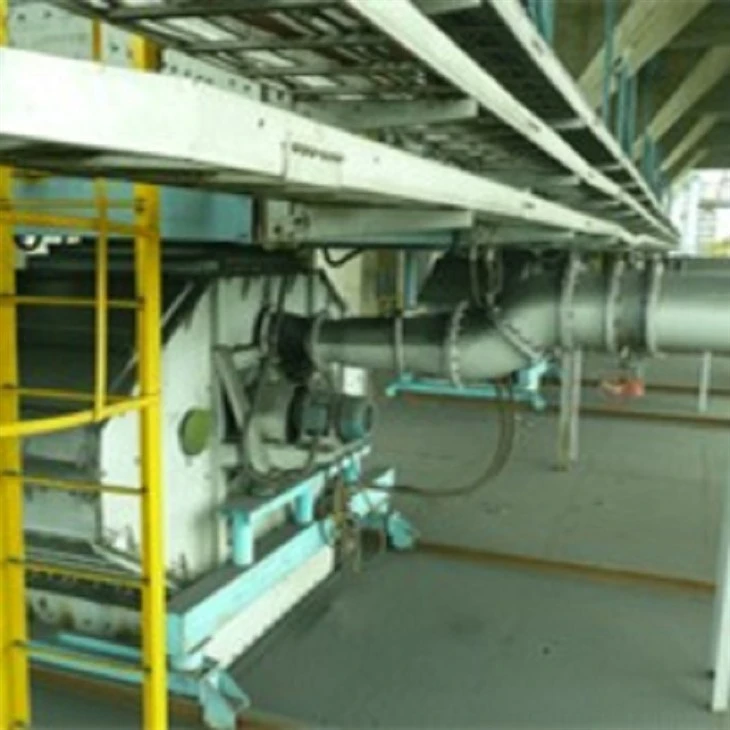
If you're in the market for a Dust Cleaning System for Converters, we can help you choose the perfect filter for your needs. We also offer a range of related products like the Dust Cleaning System for Raw Materials and the Dust Cleaning System for Coke Ovens. Our Dust Cleaning System for Converters is designed to be reliable, efficient, and easy to maintain.
If you're interested in learning more about our products or have any questions about the filters used in the Dust Cleaning System for Converters, don't hesitate to reach out. We're here to help you make the right choice for your metallurgy plant.
References:
- "Industrial Dust Collection Handbook" - This book provides in - depth information about different types of dust filters and their applications in industrial settings.
- "Air Pollution Control Technology" - It covers the principles behind electrostatic precipitators and other dust - cleaning technologies.