


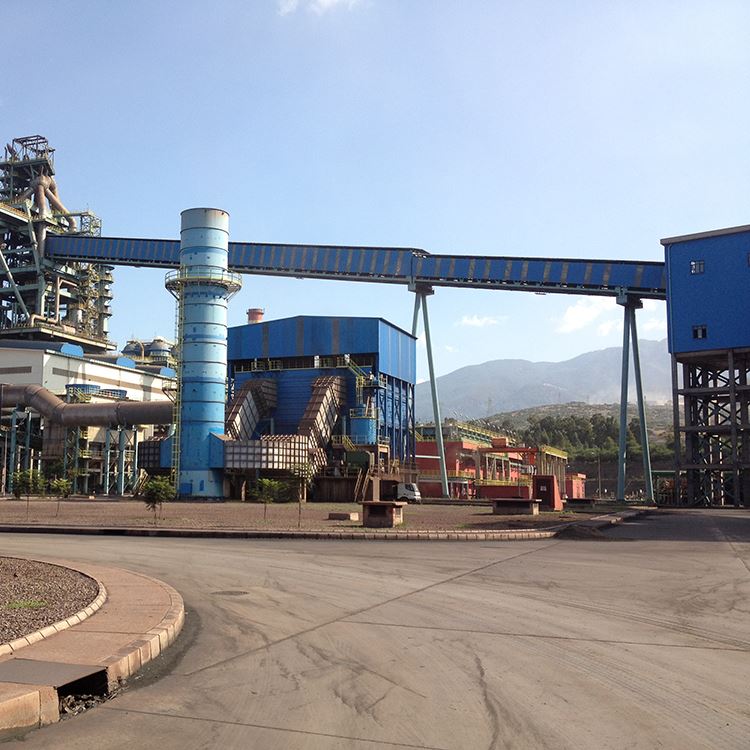
Dust Cleaning System for Metallurgy Industry
HQCC was founded in 1982, and it is a high-tech corporation which is specialized in research and develop of environmental protection technologies, manufacture environmental equipment, projects construction and consulting.
We are professionally manufacturing of de-dusting systems and their parts as bag filters, de-sulfuration equipment, pneumatic transportation equipment, dust handling equipment, mechanical air cooling equipment and components in all different types and specifications. All these products are used widely in industry fields such as metallurgy, power, machinery, foundry, cement, chemical, food, etc..
Our clients list includes a lots of large scale iron and steel enterprises such as Baosteel, Baotou Iron & Steel Group, Ma Anshan steel Company, Sanming Steel Company, Nanjing Steel Group, Xining Special Steel Company, Sha Steel company; and some foundry enterprises such as China Faw Group Corporation, Dongfeng Motor Group, Guangzhou Honda. We also export our products to Vietnam, Malaysia, Burma, Turkey, India, Indonesia, Japan, UAE, and Iran.


Why choose us?
Complete process system
Because of its long history, large output, wide distribution, high market reputation, a complete process system, has enjoyed a good reputation in the industry.
Stay true to the mission
We will do our best efforts to make more contributions to promoting the harmonious between human and the nature.
Quality team
Has established a unique design, manufacturing and construction team, can complete all kinds of system engineering design, production, installation.
Global service
International users radiate Vietnam, Malaysia, Myanmar, Italy, Turkey, Japan, Thailand, UAE, Iran, Russia, India...
A dust cleaning system for metallurgy industry is a system that removes particulate contaminants from the air in production facilities, workshops, and industrial complexes. The system cleans air by forcing it through a series of airtight filters. Once the air is cleaned, it is expelled outside or recirculated after it has achieved the proper emission standards.
As environmental concerns have grown, dust cleaning system for metallurgy industry have become necessary for industries producing large amounts of dust particles and ambient gasses. Manufacturers of dust collection systems are required to adhere to strict government guidelines and assure their customers of the efficiency of their systems as well as their compliance with EPA, NFPA, and MSHA standards.
Benefits of Dust Cleaning System For Metallurgy Industry
Enhance production
An accumulation of dust particles and debris on industrial equipment can interfere with overall plant performance. A dust cleaning system for metallurgy industry can collect these dust particles before they can interfere and compromise the health and performance of your manufacturing equipment. When your dust collection system is not performing well either due to extended wear and tear, or because your dust collector is undersized and overextended, your entire operation is at risk. Maintenance issues that go unchecked can result in an unexpected plant shut down that can close down operations for days, weeks or more. It may be difficult to know if your unit is undersized, overextended, or too old. In these cases, consult with a dust collection engineering firm and request an engineering study. By doing so you’ll get recommendations that can minimize the risk of inefficient and poorly working equipment as well as frequent and costly maintenance.
Improve product quality
For many manufacturing facilities, dust in the air can mean dust on their products. Dust can settle and accumulate on products during the manufacturing process. This has a negative impact on the quality and consistency of finished goods. A dust collector will reduce and effectively capture these dust particles, allowing for product quality to improve and maintain consistency.
Enhance health and safety standards
Inhalation of hazardous dust affects human health and a dust cleaning system for metallurgy industry is vital to removing these hazards and to keep employees safe. Industries like woodworking, chemicals, iron casting, asphalt, etc. Operate facilities that continuously emit hazardous contaminants, debris, gasses, and chemicals. If the hazardous dust particles and debris aren’t removed, employees inhale this polluted air and are at risk for both short-term and long-term health issues. A dust collection system can minimize this hazard.
Preserve the quality and prolong the life of equipment
When dust particles and debris are created inside a manufacturing facility the contaminated dust settles onto other surfaces such as computer systems and manufacturing equipment. A buildup of dust can be harmful and result in malfunctioning equipment. This can also create unnecessary, frequent, and costly maintenance in order to keep harmful dust and debris from accumulating. With a dust collector system purifying and collecting dust particles, the chances of excessive dust build-up is minimized.
Types of Dust Cleaning System For Metallurgy Industry
Cartridge dust collectors
Cartridge-style dust collectors are popular for general-purpose factory air cleaning systems, as they work well in many different applications. These collectors use filter cartridges filled with pleated nonwoven fabric, known as media, to capture dust and fumes from the airstream as it moves through. The filter media provides a large surface area on which to capture dust.
The filter media is made from a blend of polyester and cellulose and is sometimes coated with nanofibers in order to better release the dust when the cartridges are pulse cleaned. Media can also be made of spunbond fabric for increased durability against fibrous dusts or for duststhat require high-efficiency filtration.
Baghouses
Baghouses operate similarly to cartridge dust collectors, but are capable of handling higher volumes of dust-laden air. Baghouses (also called bag filter or fabric filter) operate in a similar way to cartridge dust collectors.
Like cartridge-style collectors, baghouses function as dust particle collectors, removing particles from the air using a fan that forces the air through long cylinder-shaped bags made from woven fabric. They also use a pulse-cleaning system to reverse-blast dust through deformation of the filter bags.
Wet scrubbers
Wet scrubbers, which are also called air scrubbers, utilize water or another liquid to remove dust particles from the air. They're a popular choice for operations involving potentially explosive or flammable materials or where the slurry consisting of liquid and collected dust particles can be reused.
Portable dust collectors
Portable dust collectors, also known as unit dust collectors, are small and designed for isolated jobs that produce dust. These jobs may or may not be located near your larger dust collection system.
Portable dust collectors can be strategically positioned to capture dust from the source. They can be used on their own or in conjunction with a larger dust collection system to help extract any fugitive dust from the air.
Components of Dust Cleaning System For Metallurgy Industry


Fans or blowers
Fans draw contaminated air from the workplace and take it into the dust extraction system for filtration, thus contributing to clean, breathable air.
Air filters
Filters like electrostatic filters are integral to maintaining clean air at industrial facilities. They feature high-quality media and a low air-to-cloth ratio for efficiency and reliability.
When contaminated air is pushed into the filter chambers, the system captures harmful dust particles and gasses and then releases the cleaned air into the atmosphere.
The most common types of dust filters are filter bags, panel filters, and cartridge filters, which use polyester, cellulose, or synthetic filter media.
Filter cleaning systems
Since filters help trap dust, fumes, and other pollutants, they can get clogged easily. Such clogs can decrease the air quality in a facility, hence the need for a filter cleaning system.
Some dust extraction systems automatically clean their filters with compressed air when the pressure sensors detect a high accumulation of particles. Others have an alarm to notify an operator of a pressure differential.
Dust collection receptacle
As the name suggests, this dust extraction component collects the particles filtered from the air. The dust may be collected in an enclosed box or bag or moved to a different location through a conveyor system.
Hoses
Hoses also contribute to clean air by transferring harmful pollutants for safe disposal. These flexible hoses are made from PU, polyurethane, and PVC and help reduce dust accumulation to promote a healthier working environment.
Dust hoods
These parts are strategically installed at the dust emission source to capture as much dust as possible into the extraction system. This helps reduce high dust concentrations in the atmosphere, which can reduce air quality.
Dust collector rotary airlock
This mechanism maintains the correct pressure differential, which allows the collected dust to exit the extraction system while isolating the collector hopper from the outside. These airlocks, whether trickle, rotary, or pneumatic valves, move high-volume dust loads to enhance air quality.
Ductwork
While some people may dismiss ductwork as a component that contributes to clean air, it’s worth noting that this network of pipes is crucial in transporting the contaminated air to various parts of the extraction system. Without it, the dust-laden air would escape back into the atmosphere.
Separation mechanisms
These dust extraction components, such as electrostatic or cyclone separators, also improve air quality. The mechanisms ensure particles from the airflow are removed and collected in a dust collection receptacle.
Sensors
Sensors produce alarm or light signals to notify operators about high dust levels or differential pressure, negatively impacting the dust extraction system’s performance. These early warnings help ensure the system receives timely maintenance, contributing to cleaner air.
Differential pressure check
Regular readings of differential pressure (dP) are essential for maintaining dust cleaning system for metallurgy industry performance. Differential pressure is the most basic status check for dust cleaning system for metallurgy industry health. Ensuring an accurate dp reading is vital to systems operations. Differential pressure will fluctuate on a new baghouse or one with new filters. Eventually, the dust cleaning system for metallurgy industry will reach a steady-state of operation with a consistent pressure drop. Daily observation of differential pressure will call attention to early irregularities which can be predictive of upsets in operations, internal or external factors affecting performance, adjustments needed in the operating protocol, or that it may be time to perform maintenance, potentially including filter changes. Differential pressure readings are the first step to guide operation and maintenance decisions. The differential pressure sensors and tubing lines should be cleaned and replaced at manufacturer suggested intervals. Don’t wait until they fail. Even small amounts of dust buildup in the lines can cause irreparable damage.
Empty hoppers
It’s important to note that in most cases, hoppers are intended as only a temporary collection of material, not to store it. Dust collector hoppers should be emptied regularly. Too much material in the hopper can plug the dusty gas inlet(s), create air turbulence, disrupt the airflow, cause dust re-entrainment, impede performance, abrade filters, and in some cases, create a combustible dust hazard.
Filter media inspection
Inspecting filter media in a dust cleaning system for metallurgy industry be mandatory. In most applications with felted bags, forming a dust cake is a desirable sign of optimal filtering efficiency during operation. The clean air side of the dust cleaning system for metallurgy industry should be checked for evidence of leaks resulting from tears or holes in filter bags.
Bag/filter change outs
Filters should be changed at intervals suggested by the manufacturer. Periodic bag changeouts provide maximum performance and minimum downtime of the system. It is always best to source replacement filters or bags from the original equipment supplier or a trusted aftermarket provider to ensure that the quality of materials and construction is consistent with the original filters and is built to the same dimensions and tolerance. Oftentimes, replacing filter media with third-party filters may void the equipment warranty.
Visible emissions check
Check for emissions from the exhaust stack. Visible signs of discharge are that a seal is broken or a bag is worn or torn. Emissions can result in health concerns, property damage, or fines imposed by the local EPA. Emission leaks must be found and repaired immediately.
Inspecting diaphragm valves
Properly maintained diaphragm pulse valves ensure the efficiency and effectiveness of the cleaning system of a dust cleaning system for metallurgy industry. Leaking or worn diaphragms may stick open, potentially wasting a large volume of compressed air, the highest cost operating variable associated with adust cleaning system for metallurgy industry. A worn or leaking diaphragm valve reduces compressed air availability throughout the system and results in ineffective bag cleaning. Replacing worn diaphragms is a simple maintenance procedure. Diaphragm repair kits are available wherein only the internals need to be replaced. Diaphragm kits should be inventoried at all times for unexpected maintenance needs.
Regular leak testing
Leak testing can be an ongoing diagnostic measure for system operators. Regular emissions monitoring or leak testing is a predictive maintenance measure that helps ensure filters have not failed prematurely. If increased emissions are identified, further investigation can identify damaged bags which may be causing performance issues and/or excessive emissions. In certain applications filters are subject to abrasion, chemical attack, or temperature excursions, causing failure.
Exhaust fans
Exhaust fans provide the motive force for ventilation air throughout a dust collection system. If the system fan is not operating within the prescribed conditions, a dust collection system will not operate effectively. Fans belts should be inspected quarterly; amperage should be regularly checked. Signs of needed fan maintenance include unusual vibrations, variances in standard operation, and periodic squealing.
Ductwork inspection
Ducts are an important component in a ventilation system and must be kept clear for a dust collection system to function efficiently. Regular inspection for dust accumulation ensures that necessary pressure and adequate velocities are maintained.
Certifications


Our Factory
We are professionally manufacturing of de-dusting systems and their parts as bag filters, de-sulfuration equipment, pneumatic transportation equipment, dust handling equipment, mechanical air cooling equipment and components in all different types and specifications. All these products are used widely in industry fields such as metallurgy, power, machinery, foundry, cement, chemical, food, etc..
HQCC has two workshops which cover an area about 50.000m2 with advanced machineries to satisfy the productions in different requirements.


FAQ
Find professional dust cleaning system for metallurgy industry manufacturers and suppliers in China here! Please feel free to buy high quality dust cleaning system for metallurgy industry for sale here from our factory.
metallurgy dust handling equipment, industrial dust treatment system metallurgy, metallurgy industry dust reduction technology