

Fine dust generated from waste incineration poses significant environmental and health risks. As a leading supplier in the Dust Cleaning System For Waste Incineration Industry, understanding the collection efficiency of a dust cleaning system for fine dust in waste incineration is crucial. In this blog, we will delve into the factors affecting collection efficiency, the measurement methods, and how our systems are designed to optimize this critical parameter.
Factors Affecting Collection Efficiency
Particle Size
Fine dust particles in waste incineration can vary widely in size, typically ranging from sub - micron to several tens of microns. Smaller particles, especially those in the sub - micron range, are more difficult to capture. This is because they have lower inertia, and traditional collection mechanisms such as impaction and interception are less effective. Brownian motion also plays a significant role for these tiny particles, causing them to move randomly and making it harder for the dust cleaning system to collect them. For example, particles less than 1 micron in diameter are particularly challenging to remove from the exhaust gas stream.
Gas Flow Rate
The gas flow rate through the dust cleaning system has a direct impact on collection efficiency. If the flow rate is too high, the residence time of the gas and the dust particles within the system is reduced. This means that there is less time for the collection mechanisms to act on the particles. On the other hand, if the flow rate is too low, it may lead to uneven distribution of the gas and dust within the system, and some areas may not be effectively utilized for dust collection. Our Dust Cleaning System for Exhausted Gas Produced By Waste Incineration is designed to operate within an optimal gas flow rate range to ensure maximum collection efficiency.
Dust Concentration
The initial concentration of fine dust in the exhaust gas from waste incineration can also affect collection efficiency. High dust concentrations can overload the dust cleaning system, causing the collection media (such as filters or electrostatic precipitator plates) to become clogged more quickly. This reduces the effectiveness of the collection process and may lead to increased pressure drop across the system. When dealing with high - dust - concentration scenarios, our systems are equipped with advanced pre - treatment mechanisms to reduce the dust load before it reaches the main collection components.
Temperature and Humidity
The temperature and humidity of the exhaust gas can influence the physical and chemical properties of the fine dust particles and the performance of the dust cleaning system. High temperatures can cause the dust particles to agglomerate, which may either improve or worsen collection efficiency depending on the size and nature of the agglomerates. Humidity can also affect the adhesion of dust particles to the collection surfaces. In some cases, high humidity can cause the dust to become sticky, leading to blockages in the system. Our Dust Cleaning System for Exhausted Gas Produced By Biomass is engineered to handle a wide range of temperature and humidity conditions to maintain consistent collection efficiency.
Measurement Methods for Collection Efficiency
Gravimetric Method
The gravimetric method is one of the most common ways to measure the collection efficiency of a dust cleaning system. It involves collecting the dust from the inlet and outlet of the system over a specific period of time. The collected dust is then weighed, and the collection efficiency is calculated as the difference between the inlet and outlet dust masses divided by the inlet dust mass. This method provides a direct and accurate measurement of the amount of dust removed by the system. However, it is time - consuming and requires careful sampling and handling to ensure accurate results.
Optical Methods
Optical methods, such as laser diffraction and light scattering, can be used to measure the particle size distribution and concentration of dust at the inlet and outlet of the dust cleaning system. By comparing these measurements, the collection efficiency can be estimated. These methods are relatively fast and non - intrusive, but they may have limitations in accurately measuring very small or irregularly shaped particles.
Continuous Emission Monitoring Systems (CEMS)
CEMS are increasingly being used to monitor the dust concentration at the outlet of the dust cleaning system in real - time. These systems can provide continuous data on the performance of the system and can be used to calculate the collection efficiency over time. CEMS are highly automated and can be integrated with the control system of the dust cleaning system to adjust the operating parameters for optimal performance.
Our Dust Cleaning Systems and Collection Efficiency
Our company has developed a range of advanced dust cleaning systems specifically tailored for the waste incineration industry. These systems are designed to achieve high collection efficiency for fine dust particles.
Baghouse Filters
Our baghouse filters are made of high - quality filter media that are specifically selected to capture fine dust particles. The filter bags are designed with a large surface area to increase the contact time between the dust - laden gas and the filter media. The baghouse also features a pulse - jet cleaning system that periodically cleans the filter bags to prevent clogging and maintain high collection efficiency. Our baghouse filters can achieve collection efficiencies of over 99% for fine dust particles in waste incineration exhaust gas.
Electrostatic Precipitators
Electrostatic precipitators use an electrostatic field to charge the dust particles and then collect them on charged plates. Our electrostatic precipitators are designed with advanced electrode configurations and high - voltage power supplies to ensure efficient charging and collection of fine dust particles. They are capable of handling high - temperature and high - dust - concentration exhaust gases and can achieve collection efficiencies of up to 99.9% for certain particle sizes.
Hybrid Systems
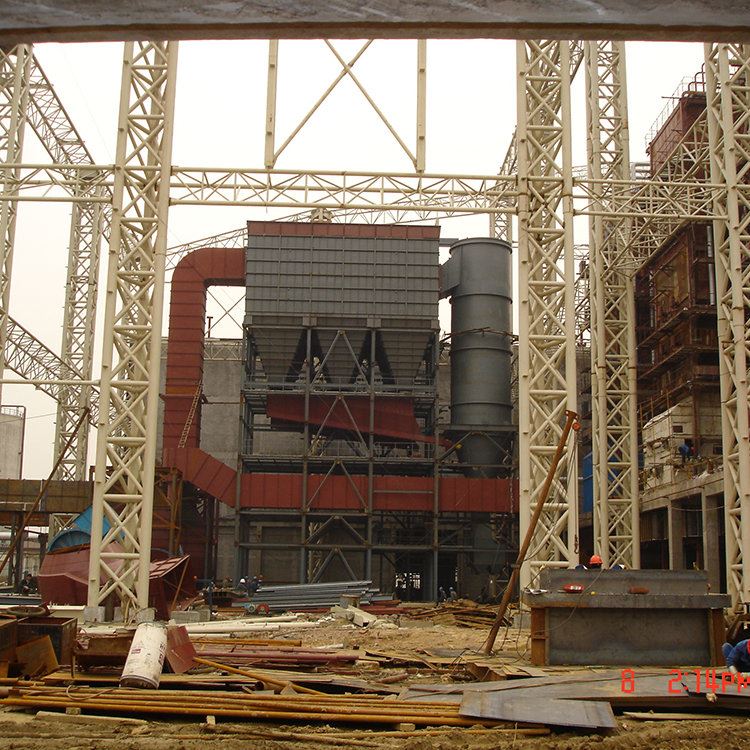
In some cases, we combine different dust cleaning technologies to create hybrid systems. For example, a combination of a cyclone pre - separator and a baghouse filter can be used. The cyclone pre - separator first removes the larger dust particles, reducing the load on the baghouse filter. This improves the overall collection efficiency and extends the service life of the filter bags. Our Dust Cleaning System for Exhausted Gas Produced By Hazardous Waste often utilizes hybrid systems to meet the strict environmental regulations for hazardous waste incineration.

Importance of High Collection Efficiency
High collection efficiency of a dust cleaning system for fine dust in waste incineration is of utmost importance for several reasons. Firstly, it helps to protect the environment by reducing the emission of harmful fine dust particles into the atmosphere. These particles can contribute to air pollution, haze, and have a negative impact on climate change. Secondly, it safeguards human health. Fine dust particles, especially those in the PM2.5 and PM10 range, can penetrate deep into the lungs and cause respiratory and cardiovascular diseases. By ensuring high collection efficiency, our dust cleaning systems play a vital role in reducing the health risks associated with waste incineration.
Contact Us for Procurement and Consultation
If you are in the waste incineration industry and are looking for a reliable dust cleaning system with high collection efficiency, we are here to help. Our team of experts can provide you with detailed information about our products, conduct on - site evaluations, and offer customized solutions based on your specific requirements. Whether you need a system for hazardous waste incineration, biomass incineration, or general waste incineration, we have the expertise and technology to meet your needs. Please feel free to contact us to start the procurement and consultation process.
References
- Brown, R. C. (2014). Introduction to Thermal and Chemical Conversion Processes. Wiley.
- Cooper, C. D., & Alley, F. C. (2010). Air Pollution Control: A Design Approach. Waveland Press.
- USEPA. (2019). Compilation of Air Pollutant Emission Factors (AP - 42). U.S. Environmental Protection Agency.