

Selecting the appropriate dust collection method for a dust cleaning system for raw materials is crucial, especially if you're in the business of handling and processing various materials. I'm a supplier of Dust Cleaning System for Raw Materials, and I’ve seen firsthand how choosing the right approach can make or break the efficiency and overall performance of a dust cleaning setup.
So, how do you go about making this all - important decision? Well, the first thing to consider is the nature of the raw materials you're working with. Different materials generate different types of dust. For instance, if you're dealing with metals, the dust might be heavier and more abrasive. On the other hand, if you're in the wood - processing industry, the dust could be lighter, flammable, and have a different particle size distribution.
Particle size is a key factor here. Larger particles can often be captured using simpler methods like gravity settlers or inertial separators. Gravity settlers are pretty straightforward. They work on the principle that larger particles will fall out of the airflow due to gravity. Inertial separators use the momentum of the particles to separate them from the gas stream. These are great for pre - treatment, getting rid of the big chunks before the air moves on to more refined cleaning stages.
However, when it comes to finer particles, you'll need more advanced techniques. Baghouse filters are a popular choice for capturing fine dust. They consist of a series of fabric bags that trap the dust as the air passes through. The fabric acts like a sieve, allowing the clean air to go through while holding back the dust. These filters have high efficiency when it comes to removing fine particles and can handle a wide range of dust loads. But they do require regular maintenance, such as bag replacement and cleaning, to ensure they keep working well.
Another option for fine dust collection is electrostatic precipitators. These work by charging the dust particles and then collecting them on oppositely charged plates or tubes. They're very effective at removing fine particles, especially in large - scale industrial settings. But they're also quite expensive to install and operate, and they need to be carefully maintained to prevent any electrical issues.
If you're in an industry where the dust is potentially explosive, like the coal or chemical industries, you need to take extra precautions. The dust collection system should be designed to prevent dust explosions. One way to do this is by using explosion - proof equipment and incorporating ventilation systems to keep the dust concentration below the explosive limit.
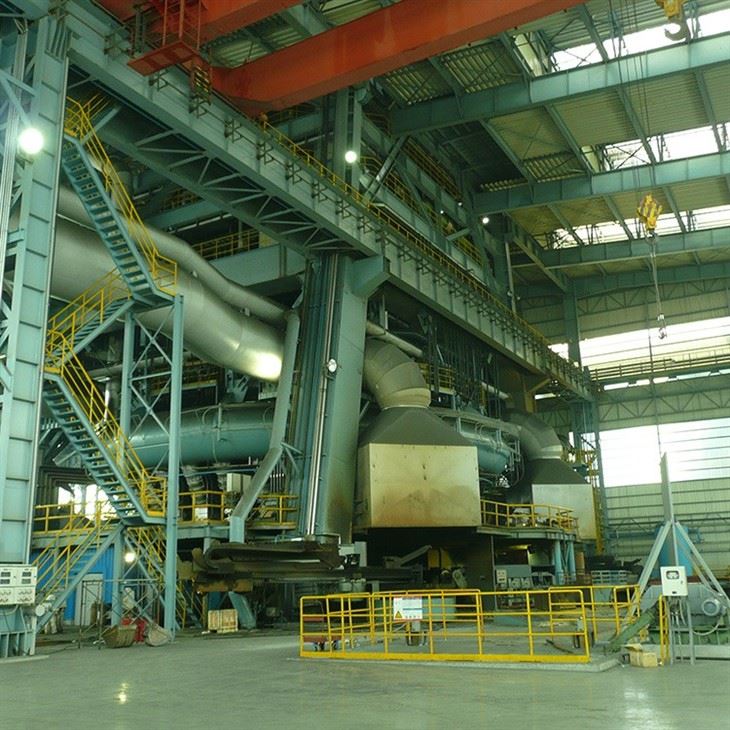
Let's talk a bit about the specific applications I've dealt with. In the metallurgy industry, we often have systems like the Dust Cleaning System for Blast Furnaces and the Dust Cleaning System for Coke Ovens. These systems have to handle high - temperature dust with specific chemical compositions. The selection of the dust collection method here is greatly influenced by the high heat and the corrosive nature of the dust. For example, in a blast furnace, you might start with a high - temperature cyclone to remove the larger particles. Then, a more sensitive baghouse filter, made of special heat - resistant and corrosion - resistant fabrics, can be used to capture the finer dust.
In the food processing industry, the main concern is hygiene. The dust collection system needs to ensure that the food products aren't contaminated. You'll commonly see systems that use wet scrubbers in this industry. Wet scrubbers pass the dusty air through a liquid, usually water. The dust particles get trapped in the liquid, and then the clean air is released. These are great for removing dust and can also help in controlling odors.
Cost is, of course, always a factor. You need to balance the initial investment in the dust collection system with the long - term operating costs. For example, a high - end electrostatic precipitator might have a high upfront cost, but it could have lower operating costs in terms of energy consumption if it's well - maintained. On the other hand, a simple baghouse filter might be cheaper to install, but the cost of bag replacement and cleaning can add up over time.
Another aspect to think about is the available space. Some dust collection methods, like large - scale electrostatic precipitators, require a significant amount of space. If you're working in a tight area, you might have to go for more compact solutions like small - scale baghouse filters or cartridge filters.
Once you've narrowed down the potential dust collection methods, it's a good idea to do some testing. You can take samples of the dust from your raw material processing and test different collection methods on a small scale. This will give you a better idea of how effective each method is for your specific situation.
As a supplier of Dust Cleaning System for Raw Materials, I know that every customer's needs are unique. There's no one - size - fits - all solution. That's why it's essential to have a detailed consultation. We can work together to understand your raw materials, your processing conditions, your space constraints, and your budget.
If you're in the market for a dust cleaning system for your raw materials, I encourage you to reach out. We can have a chat, and I can help you figure out the best dust collection method for your specific needs. Whether it's a small - scale operation or a large industrial plant, we've got the expertise to assist you.
Contact me for a professional consultation and let's start working on the perfect dust cleaning solution for your business.
References
- Industrial Ventilation: A Manual of Recommended Practice, 29th Edition.
- Dust Collection Handbook, 3rd Edition.
- Air Pollution Control: A Design Approach, 4th Edition.